
Understanding how fire extinguishers work—and choosing the right type—can make a crucial difference during an emergency.
Types of Fire Extinguishers
Fire extinguishers are not universally applicable. Each type is designed to handle specific classes of fire. Knowing their differences helps ensure you choose the correct extinguisher for your home, office, or facility.
- Water
Suitable for Class A fires involving solid combustibles such as wood, paper, and fabrics.
- Foam
Effective for Class A (solids) and Class B (flammable liquids) fires. Often used in offices, petrol stations, and commercial areas.
- Dry Powder
A versatile option for Class A, B, and C fires. Commonly known as the ABC extinguisher, it works on solids, flammable liquids, and gases.
- Carbon Dioxide (CO₂)
Ideal for Class B fires and electrical fires. It leaves no residue, making it suitable for server rooms, electrical panels, and machinery.
- Wet Chemical
Specially designed for Class F fires involving cooking oils and fats. Kitchens and food preparation areas commonly use this product.
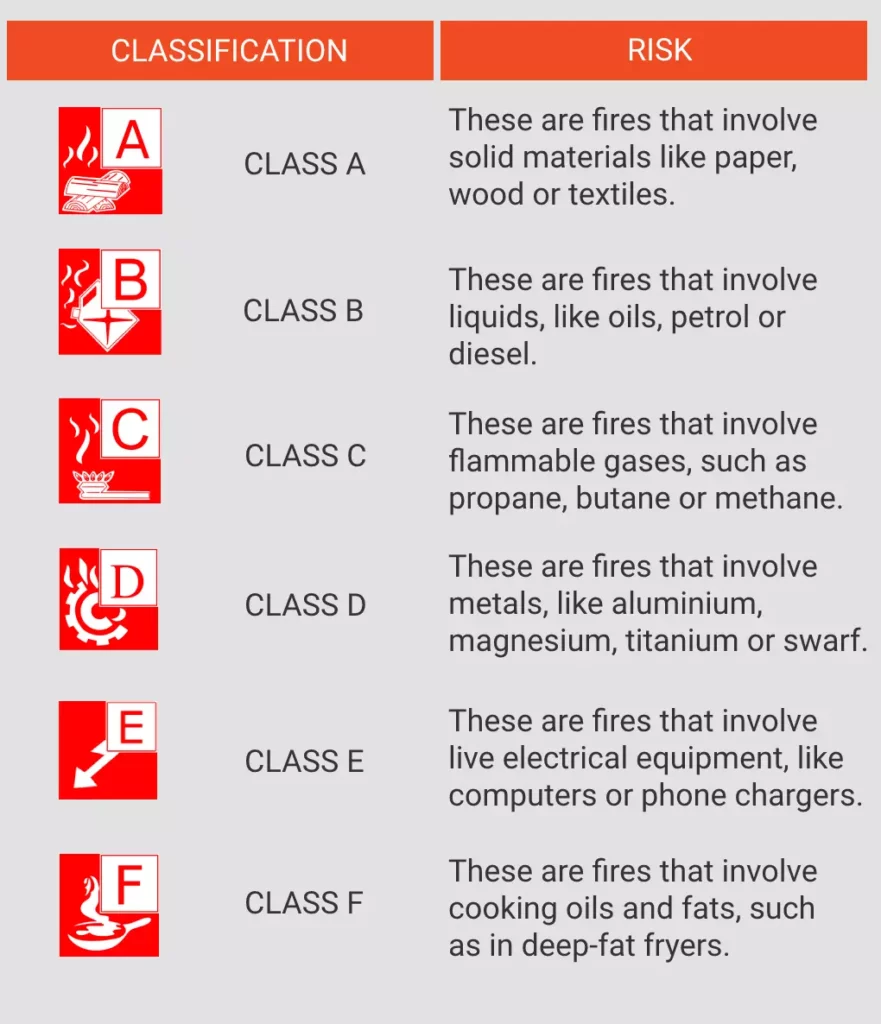
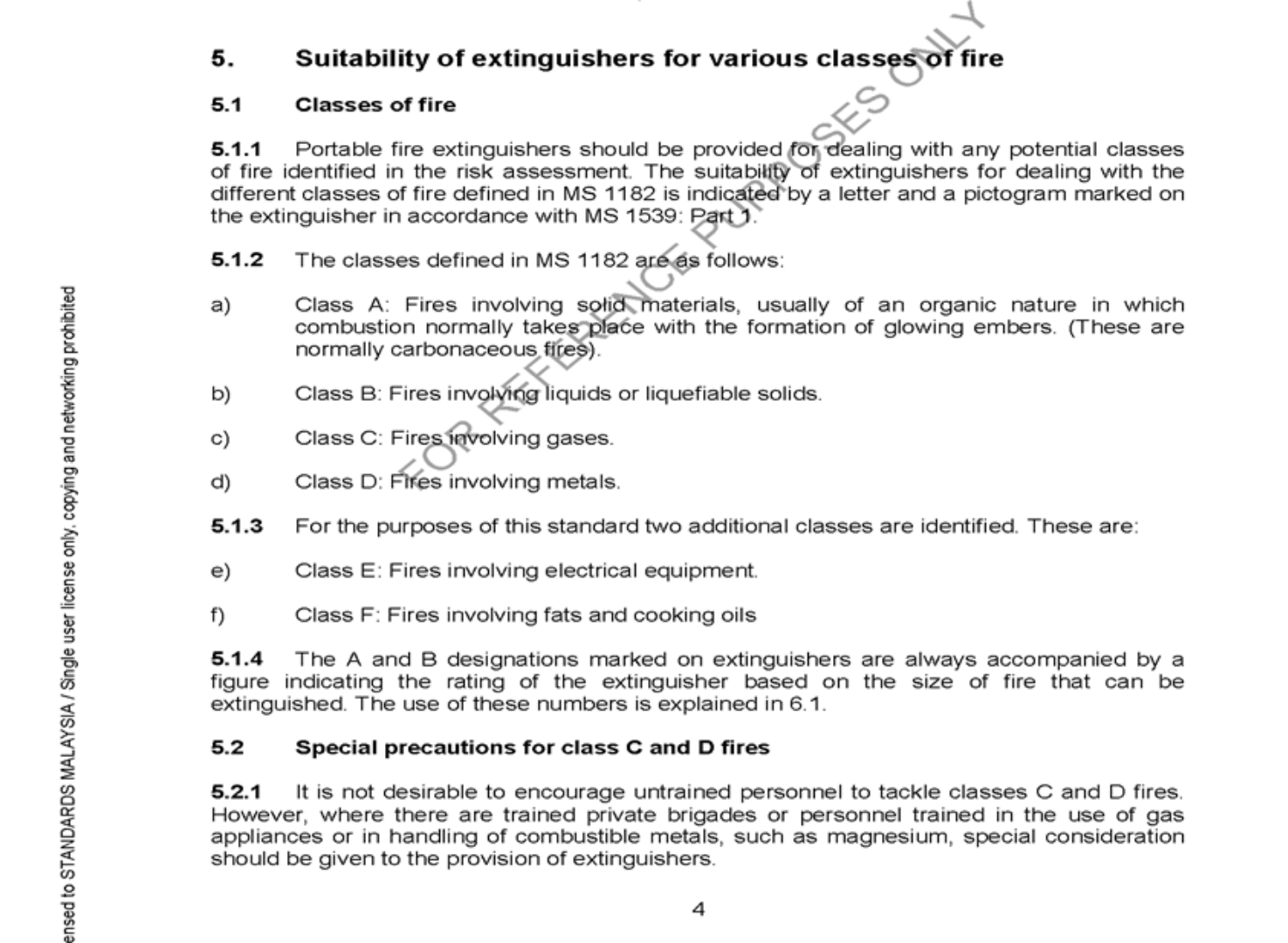
In Malaysia, the classes of fire are categorized according to MS 1539, Part 3, 2003, which aligns with recognized international standards. Different burning materials have distinct properties and reactions. Therefore, fires are classified into six main classes, namely:
 References